Ship design has always been shaped by necessity. For centuries, engineers and shipbuilders focused on creating vessels that could safely carry people and cargo across vast and unpredictable waters. Over time, this led to standardized approaches built around proven principles of stability, propulsion, and structural strength. Yet the ocean is anything but predictable, and modern challenges are pushing engineers to rethink long-held assumptions.
Today, ship design is entering a phase where unconventional ideas are no longer experimental—they are essential. Rising fuel costs, environmental pressures, and changing global trade patterns are forcing designers to explore solutions that break away from tradition. At the same time, advances in materials, digital tools, and energy systems are opening doors to concepts that were once considered impractical.
This article explores how ship design is evolving through unconventional thinking. It looks at how engineering creativity is reshaping vessel architecture and how these ideas are influencing the future of maritime innovation.
Rethinking the Fundamentals of Ship Design
Traditional ship design is grounded in a set of core principles that have stood the test of time. Stability ensures that a vessel remains upright, buoyancy keeps it afloat, and propulsion drives it forward. These fundamentals remain unchanged, but the way they are applied is evolving.
Unconventional ship design challenges the idea that there is only one “correct” way to build a vessel. Engineers are now questioning standard hull shapes, propulsion layouts, and structural arrangements. Instead of relying solely on established models, they are exploring alternatives that better align with modern demands.
This shift does not mean abandoning proven methods. Rather, it involves building upon them with new insights and technologies. By rethinking the fundamentals, ship design becomes more adaptable and capable of addressing complex challenges.
Exploring Alternative Hull Configurations
One of the most visible areas of innovation in ship design is the hull. The traditional single-hull structure has dominated for centuries, but alternative configurations are gaining attention for their potential benefits.
Multi-hull designs, such as catamarans and trimarans, offer improved stability and reduced resistance. These designs can enhance fuel efficiency and provide smoother operation in certain conditions. While they are not suitable for every application, they demonstrate how unconventional thinking can lead to practical advantages.
Another area of exploration involves asymmetric hull shapes and hybrid configurations. These designs aim to optimize performance by reducing drag and improving maneuverability. Advances in computational modeling have made it possible to test these ideas with greater accuracy, allowing engineers to refine concepts before construction.
These alternative approaches highlight how ship design is moving beyond traditional boundaries to achieve better performance.
Unconventional Propulsion Systems
Propulsion is a central element of ship design, and it is also an area where innovation is rapidly advancing. Traditional engines remain widely used, but there is growing interest in alternative systems that offer improved efficiency and reduced environmental impact.
Some unconventional propulsion concepts involve combining multiple energy sources. Hybrid systems integrate different technologies to balance power, efficiency, and sustainability. While these systems can be complex, they offer flexibility and resilience in operation.
Other approaches focus on rethinking how propulsion interacts with the vessel itself. For example, distributed propulsion systems place multiple smaller units across the ship, improving control and efficiency. These systems challenge the traditional idea of a single, centralized engine.
As ship design continues to evolve, propulsion systems are becoming more integrated with overall vessel architecture, leading to more innovative and efficient solutions.
The Influence of Biomimicry in Ship Design
Nature has long been a source of inspiration for engineering, and ship design is no exception. Biomimicry involves studying natural systems and applying their principles to technological challenges.
In the context of ship design, this can mean examining how marine animals move through water. Fish and marine mammals have evolved to minimize resistance and maximize efficiency, offering valuable insights for hull design and propulsion.
For example, certain hull shapes are inspired by the streamlined forms of aquatic creatures. These designs aim to reduce drag and improve energy efficiency. While not all biomimetic concepts are practical on a large scale, they provide a fresh perspective on how vessels can interact with their environment.
By looking to nature, engineers can uncover unconventional solutions that enhance performance and sustainability.
Digital Innovation and Experimental Design
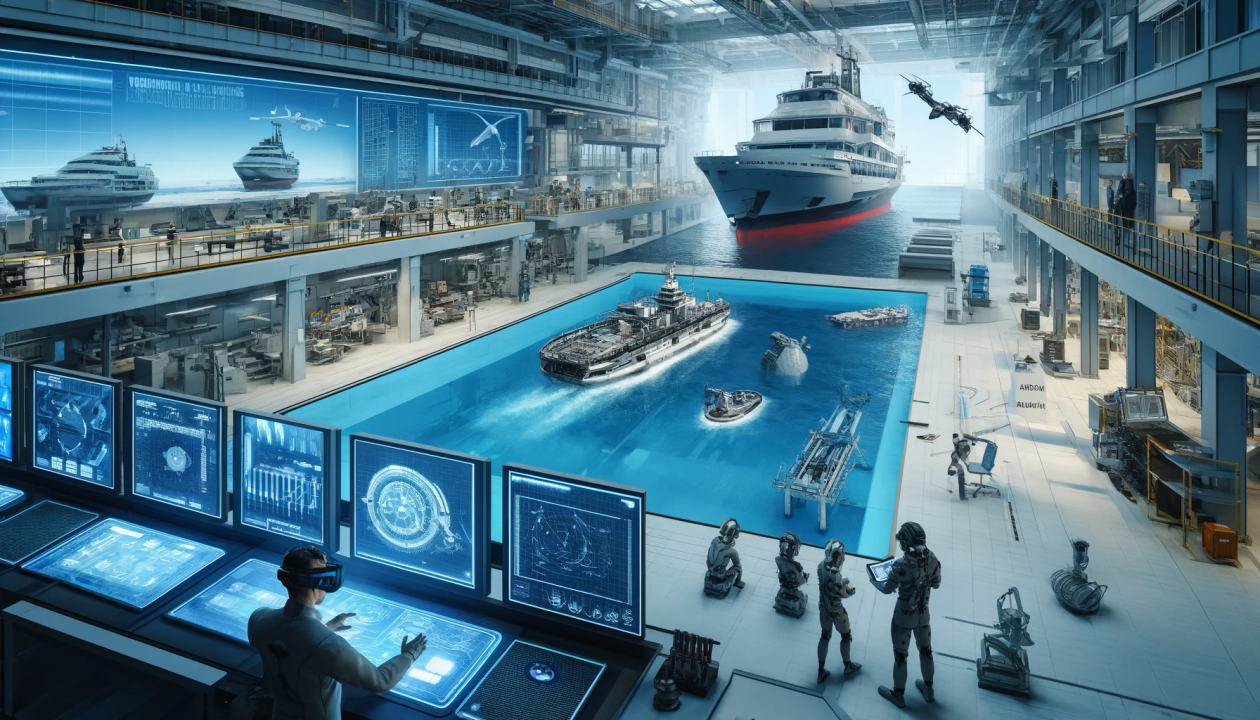
Digital technology has transformed the way ship design is approached. Engineers now have access to advanced simulation tools that allow them to explore unconventional ideas with greater confidence.
These tools enable designers to test a wide range of concepts in virtual environments. They can analyze how different hull shapes, materials, and propulsion systems perform under various conditions. This reduces the risk associated with experimental designs and accelerates the innovation process.
Digital twins are another important development. These virtual models replicate real vessels, providing continuous feedback on performance. This data can be used to refine designs and improve future ship design projects.
The integration of digital tools has made it easier to experiment with new ideas, leading to more creative and effective solutions.
Materials and Structural Creativity
Materials play a crucial role in enabling unconventional ship design. Advances in materials science have introduced new options that offer improved strength, durability, and flexibility.
Lightweight materials can reduce the overall weight of a vessel, improving efficiency and performance. At the same time, engineers must ensure that these materials can withstand the stresses of marine environments.
Structural creativity is also becoming more prominent. Engineers are exploring new ways to distribute loads and reinforce critical areas. This can lead to designs that are both stronger and more efficient.
By combining innovative materials with creative structural approaches, ship design can achieve levels of performance that were previously unattainable.
Adapting to Environmental Challenges
Modern ship design must address a range of environmental challenges. Climate change, stricter regulations, and growing awareness of ecological impact are all influencing how vessels are designed.
Unconventional ideas are playing a key role in this adaptation. Engineers are exploring ways to reduce emissions, minimize energy consumption, and protect marine ecosystems. This includes optimizing hull shapes, improving propulsion efficiency, and integrating environmentally friendly technologies.
Designers are also considering how ships interact with their surroundings. Reducing noise pollution and minimizing disturbance to marine life are becoming important factors in ship design.
These efforts reflect a broader commitment to sustainability, where innovation is driven by both performance and responsibility.
Human-Centered Innovation in Ship Design
While much of ship design focuses on technical performance, the human element remains essential. Crew members rely on ships to be safe, efficient, and comfortable to operate.
Unconventional design approaches are increasingly considering human factors. This includes improving workspace layouts, enhancing visibility, and simplifying control systems. These changes can reduce fatigue and improve decision-making.
Automation is also influencing the human aspect of ship design. While some tasks are becoming automated, human oversight remains critical. Designers must ensure that systems are intuitive and that operators can respond effectively in complex situations.
By prioritizing the human experience, ship design becomes more practical and effective in real-world applications.
Balancing Innovation with Practicality
One of the key challenges in unconventional ship design is balancing creativity with practicality. New ideas must be tested, validated, and proven before they can be widely adopted.
Economic considerations also play a role. Innovative designs must be cost-effective and deliver measurable benefits. This requires careful planning and collaboration between engineers, manufacturers, and operators.
Regulatory requirements add another layer of complexity. Ships must meet strict safety and environmental standards, which can limit design flexibility. Navigating these requirements requires expertise and a clear understanding of industry expectations.
Despite these challenges, the potential benefits of unconventional ship design make it a worthwhile pursuit.
The Future of Unconventional Ship Design
The future of ship design is likely to be shaped by continued exploration of unconventional ideas. As technology advances and environmental pressures increase, the need for innovative solutions will only grow.
Autonomous vessels, advanced energy systems, and adaptive structures are just a few of the concepts being explored. These developments have the potential to transform how ships are designed and operated.
Collaboration will be essential in this process. Engineers, researchers, and industry stakeholders must work together to turn ideas into practical solutions.
The future of ship design is not defined by a single breakthrough but by a continuous process of experimentation and refinement.
Frequently Asked Questions (FAQ)
What is ship design?
Ship design is the process of creating vessels that can safely and efficiently operate in marine environments. It involves considerations such as structure, stability, propulsion, and performance.
What makes a ship design unconventional?
An unconventional ship design challenges traditional methods and explores new approaches to hull shape, propulsion, materials, or overall architecture.
Why is innovation important in ship design?
Innovation helps improve efficiency, reduce environmental impact, and address new challenges in the maritime industry.
How does technology influence ship design?
Technology enables advanced simulations, data analysis, and digital modeling, allowing engineers to test and refine new ideas more effectively.
What role does sustainability play in ship design?
Sustainability drives the development of cleaner energy systems, efficient designs, and environmentally responsible practices.
Are unconventional ship designs widely used?
Some unconventional designs are already in use, while others are still being tested and refined. Adoption depends on practicality, cost, and regulatory approval.
What is the future of ship design?
The future of ship design includes greater use of automation, alternative energy systems, and innovative materials to create more efficient and sustainable vessels.
Conclusion
Ship design is entering an era where engineering meets imagination in new and exciting ways. Unconventional ideas are challenging traditional approaches and opening up new possibilities for how vessels are built and operated. From alternative hull configurations to innovative propulsion systems and advanced materials, these developments are reshaping the maritime landscape.
At the same time, the core principles of ship design remain essential, providing a foundation upon which new ideas can be built. The key lies in finding the right balance between innovation and practicality, ensuring that new concepts deliver real-world benefits.
As the industry continues to evolve, ship design will play a central role in addressing global challenges and advancing maritime technology. By embracing unconventional thinking, engineers are not only improving performance but also redefining what is possible on the open sea.